Product for Unproductivity
I am not anti-technology. After all, there are forms of technology – from tools that let us observe the natural world to decentralized, noncommercial social networks – that might situate us more fully in the present. Rather, I am opposed to the way that corporate platforms buy and sell our attention, as well as to designs and uses of technology that enshrine a narrow definition of productivity and ignore the local, the carnal, and the poetic.
– How to Do Nothing, Jenny Odell
Increasingly our daily lives are becoming instrumented and measured – turning our actions into data. This data feeds advertising models, facial recognition software, and recommended viewing algorithms, in order to power products ranging from online advertisements, to AI security systems, to video hosting apps, often without our awareness and beyond informed consent.
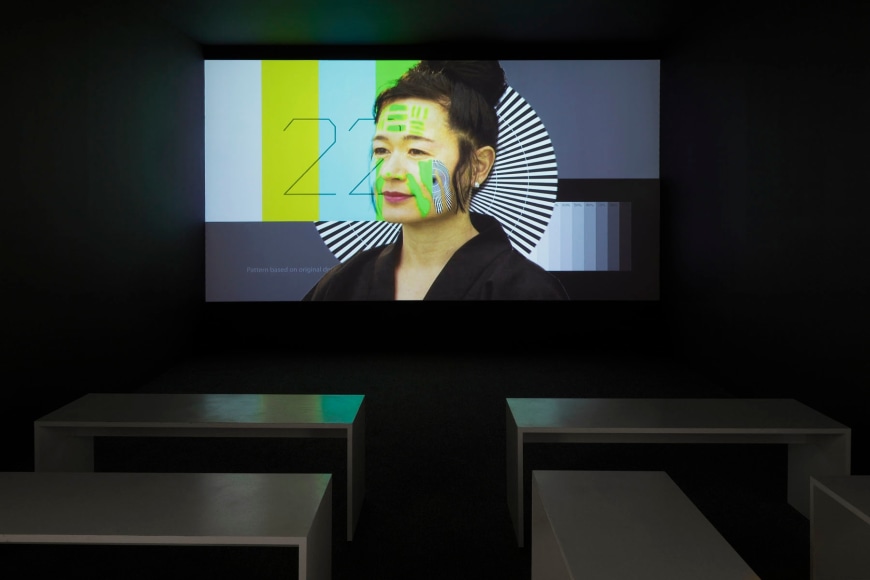
How Not to Be Seen: A Fucking Didactic Educational .MOV File by Hito Steyerl, 2013
Our data is gathered in myriad ways, including the digital products we routinely use: from the map applications that guide us to our destinations, to the search engines we query, to the social media networks we use to keep in touch with our loved ones. It’s increasingly difficult to imagine living our lives without these tools as they continue to facilitate more and more of our everyday lives.
However, the companies beyond these products rarely have our best interests in mind. Funded by entities that reward “engagement” and “time in app”, there’s an incentive to encourage addictive behavior from their users (us) in order to to fulfill these goals. As a result our self-image and image of those around is transforming. On the one hand leading us to have unreasonable expectations of ourselves, while simultaneously diminishing our views of our peers and fellow citizens. Our camera apps apply filters by default to adjust our selfies in unrealistic ways, and social media leads us to believe our lives are mundane in comparison to our peers. The commodification of services turns workers into blue dots shuffling around maps delivering our food, groceries, and other daily necessities. These products also have inarguably concrete impacts – destabilizing once (relatively) secure jobs, and increasing the potential to monetize and measure all aspects of our activity.
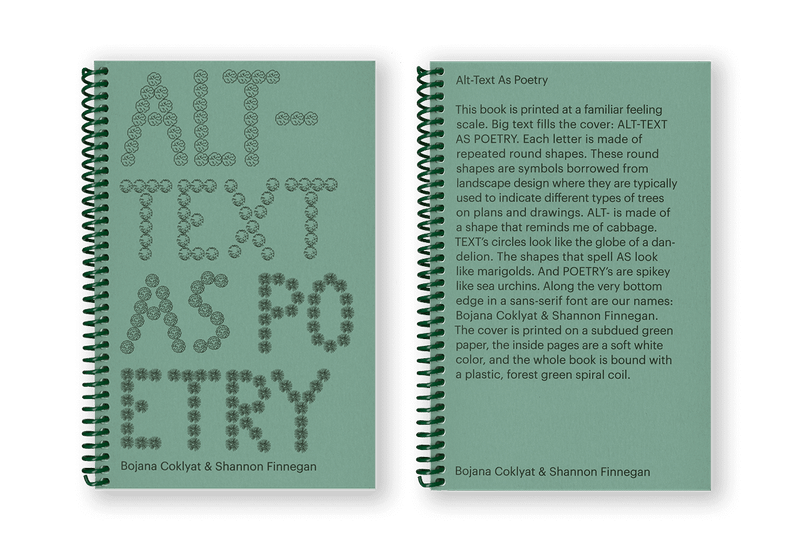
"Alt Text as Poetry Workbook" by Bojana Coklyat and Shannon Finnegan, Designed by Companion—Platform, 2020
However, products don’t need to work towards these ends, and we can imagine tools with goals that are more humane, healthy, and “valuable” beyond a capitalistic mindframe. In this project you will explore the connection between graphic design, productivity, and products by creating “unproductive” products. This doesn’t mean that you’ll make products that lack function, or that make our lives more difficult, but rather products that reframe our relationship to productivity and that embrace values that are socially responsible.
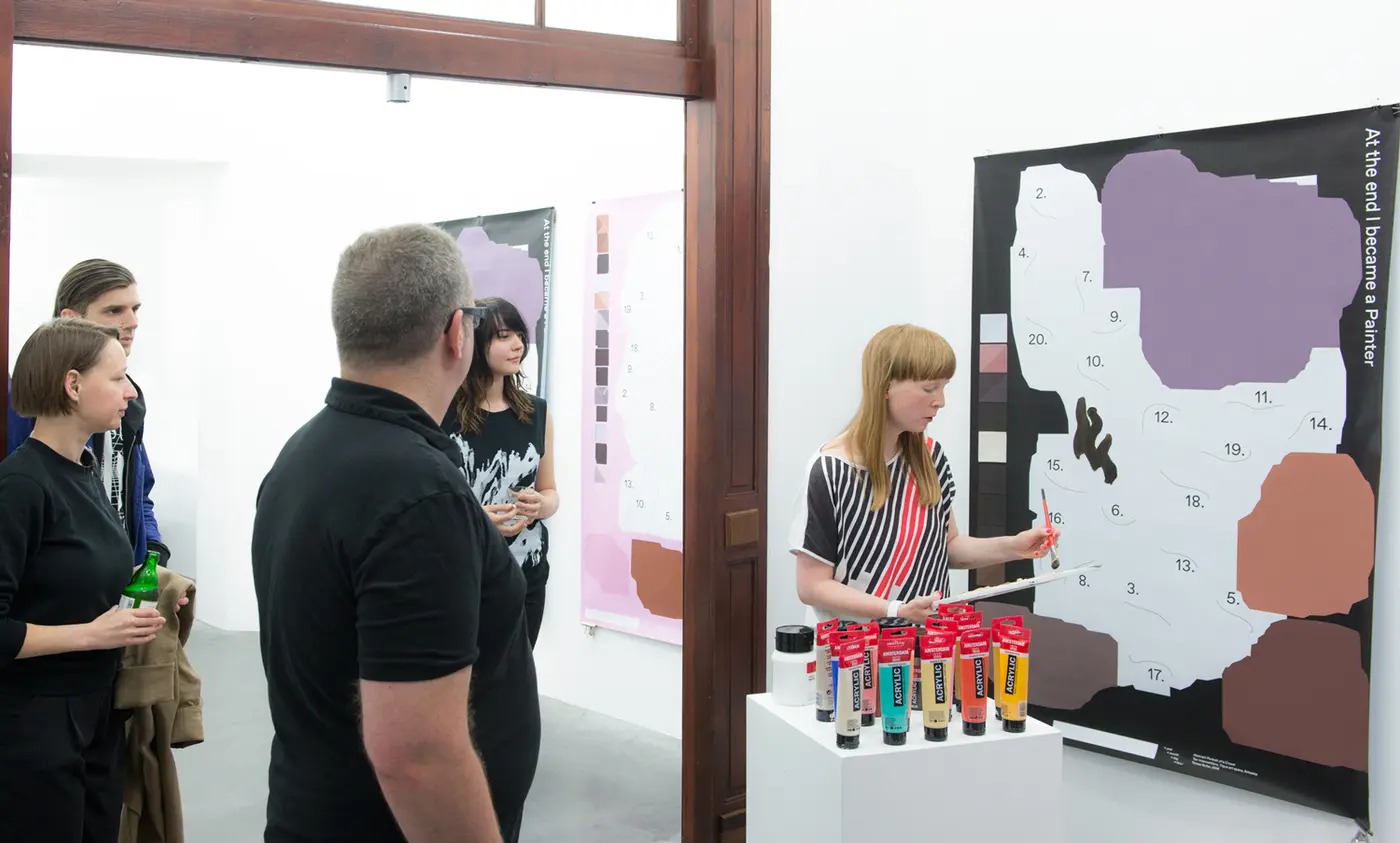
"Abstract Portrait of the Crowd" by the Rodina, 2016
While the example of products this prompt discusses are digital, your product does not need to be. There’s a common tendency to put technology first in product design, finding solutions in search of problems. In this project your work will be driven by the humane, not necessarily working to solve a problem, but instead considering how our work can exist outside of a problem solving framework and celebrate the poetic.
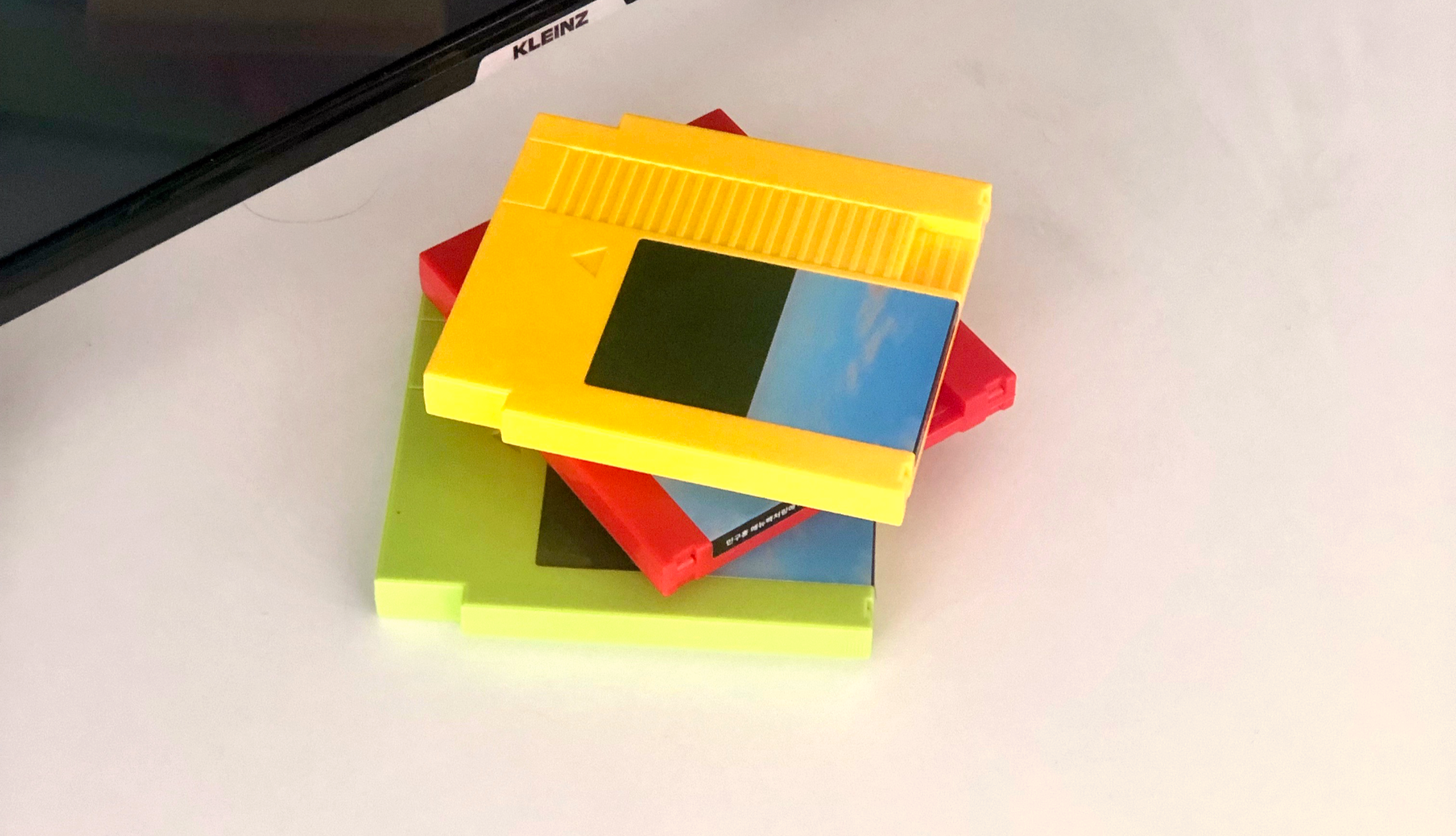
민구홍 매뉴팩처링에 오신 것을 환영합니다 by 민구홍
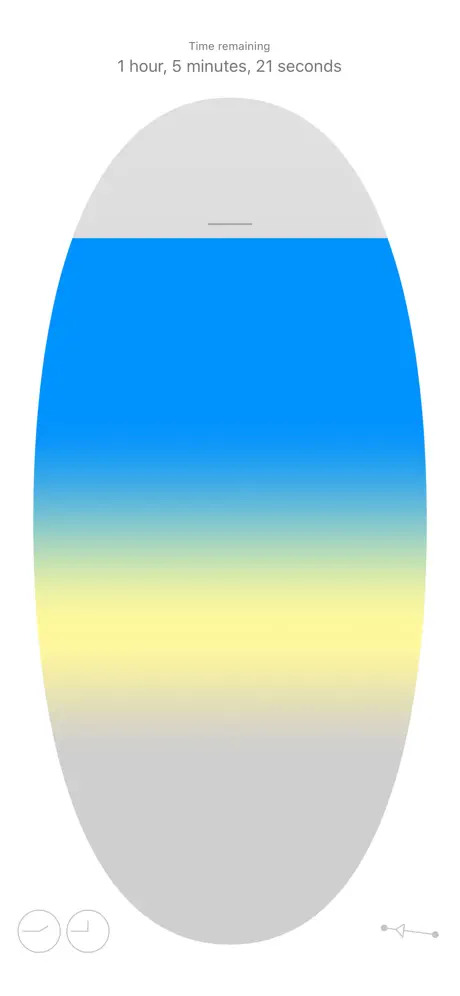
"Flight Simulator" by Laurel Schwulst, 2019
Due October 13 (4 weeks)
Topics: Productivity, Platforms, Local, Slowness, Leisure
Learning Outcomes
- Consider how our products reframe our personal and social relationships via their design
- Explore how unproductivity can be a strategy for creativity
- Create a product that enacts a personal perspective
- Test the potential for graphic design in product design
Requirements
- A mass producible product in a set of multiples (2 copies min.)
Project Kickoff: Thurs September 15
Step 1: Due Thurs September 22
Select an area of “unproductivity” that you would like to explore. This can be in opposition to something (you dislike how apps like Slack keep you tethered to your workplace), or to promote something that doesn’t fall under the rubric of productivity (you’d like there to be more ways to exchange used goods), or simply something that brings you joy (a tool for visual expression).
Step 2: Thurs September 29
Consider what sort of “product” would help enable the phenomena you imagine. How can a tool, routine, keepsake, or other good (driven by graphic design) help enable the behavior, feelings, and relationships you would like to promote?
Step 3: Due Mon October 13
After selecting a product, bring it to fruition. Look for simple solutions that are not technology led, and work within your skillset. If you want an online community based project, consider collecting responses via email vs. a database, or via a literal mailbox. If you want to facilitate behavior on your phone, how can a physical device enable the outcome rather than a complex application? As a final deliverable, produce your product in a multiple of 2 or more – your product must be mass(-ish) producible as a set of multiples.
Schedule
Week 3
Project kickoff

Week 4
Step 1 Due: Share area of focus

Week 5
Step 2 Due: Share product ideas

Week 6
Group Meetings

Week 7
Group Meetings

Week 8
Step 3 Due / Final Crit
References
- Abstract Poster of the Crowd, The Rodina
- Alt Museum, After New Order
- Alt Text as Poetry, Shannon Finnegan
- Book of Chances, Sulki and Min
- CV Dazzle, Adam Harvey
- DFace, Adam Harvey and Jules LaPlace
- FLEFIXX, Sun Young Oh
- Flight Simulator, Laurel Schwulst
- Gossip’s Web, Elliot Cost
- Instagram Demetricator, Ben Grosser
- josefAlbersBot, Omar Mohammed
- Jules, David Reinfurt
- Multi, David Reinfurt
- Not for You, Ben Grosser
- Pick Up Sticks Screensaver, Tamara Shopsin and David Reinfurt
- Pointer Pointer, Studio Moniker
- Prayer Place, Omar Mohammed
- Rivers, Min Guhong
- Somebody, Miranda July
- special.fish, Elliot Cost
- Stencils, Karl Nawrot
- Three Minutes of Doing Nothing, David Reinfurt
- Times Blank, Min Guhong
- Wyoscan, David Reinfurt
- ZXX, Sang Mun