Group Storefront
Organizing graphic design exhibitions is always problematic: graphic design does not exist in a vacuum, and the walls of the exhibition space effectively isolate the work of design from the real world. Placing a book, a music album, or a poster in a gallery removes it from the cultural, commercial, and historical context without which the work cannot be understood. The entire raison d’être of the work is lost as a side effect of losing the context of the work, and the result is frozen appearance stripped of meaning, liveliness and dynamism of use. Presenting design in an exhibition space in this way is akin to looking at a collection of stuffed birds in order to study how they fly and sing. In spite of this, it is more and more common to see design as ‘object’, not only in books and magazines, but also in the ‘white cube’ of the exhibition space.
– Graphic Design in the White Cube, Peter Biľak
Arcangel Surfware was founded by artist Cory Arcangel as “a non-aspirational lifestyle brand” with the aim of producing comfortable, useful products for web surfing, and has since expanded to offer a range of retail products and publications. For Arcangel Surfware, Arcangel has emblazoned his signature Comic Sans typeface, yin-yang symbol, and rainbow gradients onto a variety of retail products: bedsheets, tracksuits, zines with printed lines of code, and vinyl albums of electronic keyboard music. Arcangel Surfware exists in parallel with Arcangel’s artistic practice, allowing him to circulate works via the commercial internet and without the mediation of art institutions or galleries.
– Net Art Anthology on Surfware by Cory Arcangel
To share our projects, and as the final activity of the class, we will exhibit and sell our works in a group storefront. In doing so we will question the significance of circulation in activating graphic design works, the potential for alternative economies, and how we can transmit our ideas through exhibition programming (talks, tours, etc.).
As we design our storefront, consider how mass production creates the need for graphic design and graphic design work. What about the circulation of goods at a mass scale encourages graphic consistency? How does the designed object gain value through mass production, where as the art object (often) loses value?
Furthermore, consider the larger themes of the class – which relate to our conditioning to productivity and extractivism as a status quo – and how our storefront can subvert these assumptions. Although we are selling goods it doesn't mean we need to exchange the for cash. What other economic systems may be embedded in our shop/show?
At its core the storefront will serve as a exhibition space for your works. As such, how can we activate the area and engage with our community(ies) through programming such as talks, guided tours, and performance? What are the fundamental benefits of creating a temporal display of your works?
The storefront will exist in two formats:
- A physical storefront / pop-up shop where visitors can purchase and view your products
- A website that accompanies the in-person store experience and creates a record of the storefront that is only accessible from within the physical exhibition
Working with these dual environments, reflect on the symbiotic nature of our physical and digital spaces, and how they can encompass experiences from our last semester. Each student should submit at least one work for the show to be sold, and overall the shop should feature the primary activities of the course (Modified Tool, Product for Unproductivity, Product for Research, Workshop with Min Guhong Mfg., Company Precepts).
Finally, this storefront is meant to be a celebration of our time together! Let's work as a team and enjoy ourselves! 😄
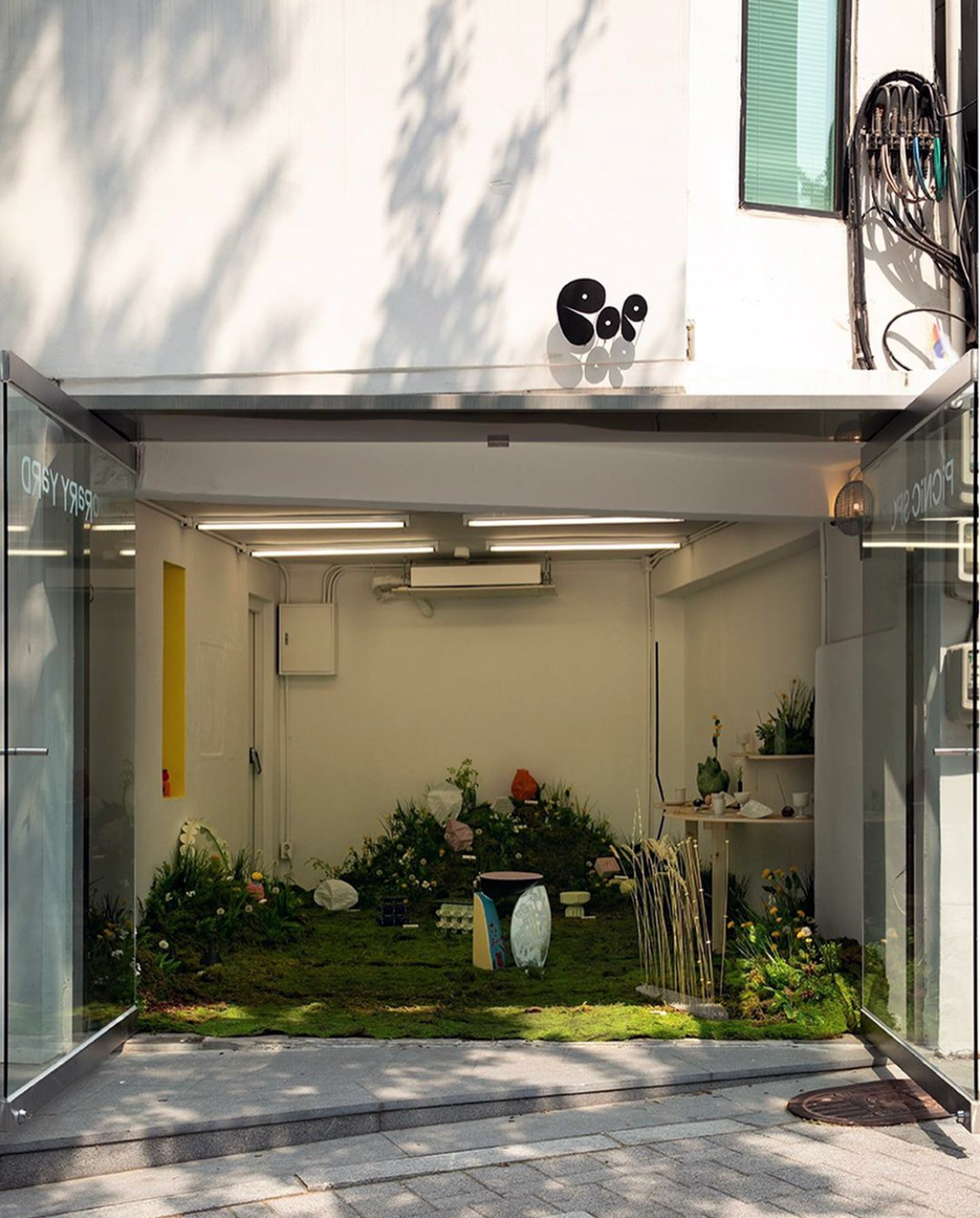
"Temporary Yard 2: Picnic", at Pop by Post Poetics, 2022
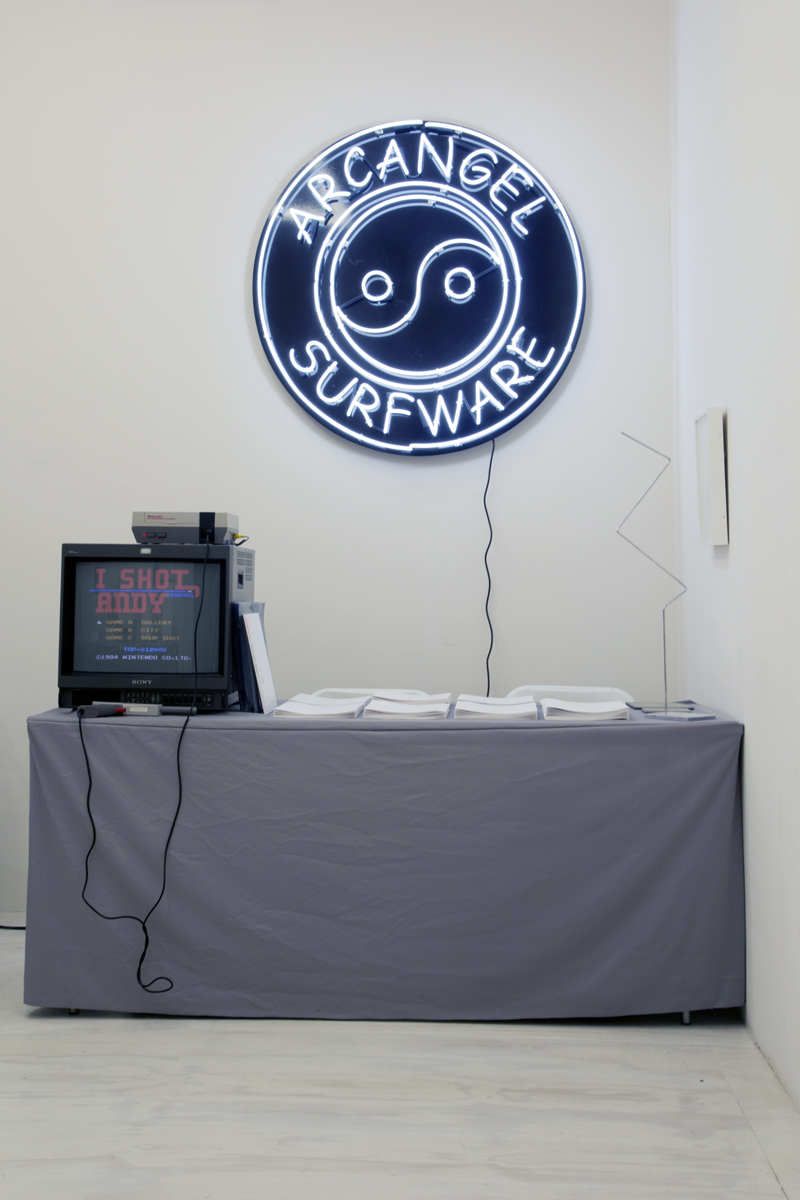
"Arcangel Surfware" by Cory Arcangel
Opening December 17
Topics: Exhibition, Space, Commercce
Learning Outcomes
- Designing space to create an engaging environment
- Considering how a project changes when it becomes a commodity and is in circulation
- Explore how a design meant for a multiple can be transformed into an exhibition format
- Conceptualize alternative forms of exchange and economies
- Practice working as a team
Requirements
- One product from each student sold in multiples
- An installation featuring the class' work
Project Kickoff/Step 1: Thurs November 24
Brainstorm exhibition ideas and select roles / teams.
Step 2: Thurs December 1
First set of deliverables (sketches, rough drafts, etc.) for each group:
Project Management
share a schedule and plan for collecting works and install datesSpatial Design
sketch of floorplan and shelving/furnitureIdentity Design
"logo", type selection, online "poster" sketchesWebsite Design
sketches of website and interactive prototypeInstallation Team
list of vendors for paint, vinyl, printing, furniture construction / rental, list of required materialsEditorial Team
rough draft of show statement that includes store concept and title proposalsCommunications Team
proposal of show communication timeline + strategy
We will need to send out designs with an especially long production time at this point (ie. furniture).
Step 3: Due Thurs December 8
Final proposal for all materials, and plan for install on Thursday December 15
Step 4: Due Thurs December 15
Install storefront at Pop (31-1, Sowol-ro, Jung-gu)
Opening: Sat December 17
Opening event TBD
Schedule
Week 14
Step 1 Due: Kickoff / Brainstorm

Week 15
Step 2 Due: Rough Sketches + Send Out Time Sensitive Designs for Production

Week 16
Step 3 Due: Final Designs + Install Plan

Week 17
Step 4 Due: Install
Opening event :D
Reading
- The Yale MFA Graphic Design Show, by Rachel Berger
- Graphic Design in the White Cube, by Peter Biľak
- The Exhibitionary Apparatus: The Exhibitionary Apparatus, by Andrew Blauvelt
- P!DF (excerpts), by Prem Krishnamurthy
References