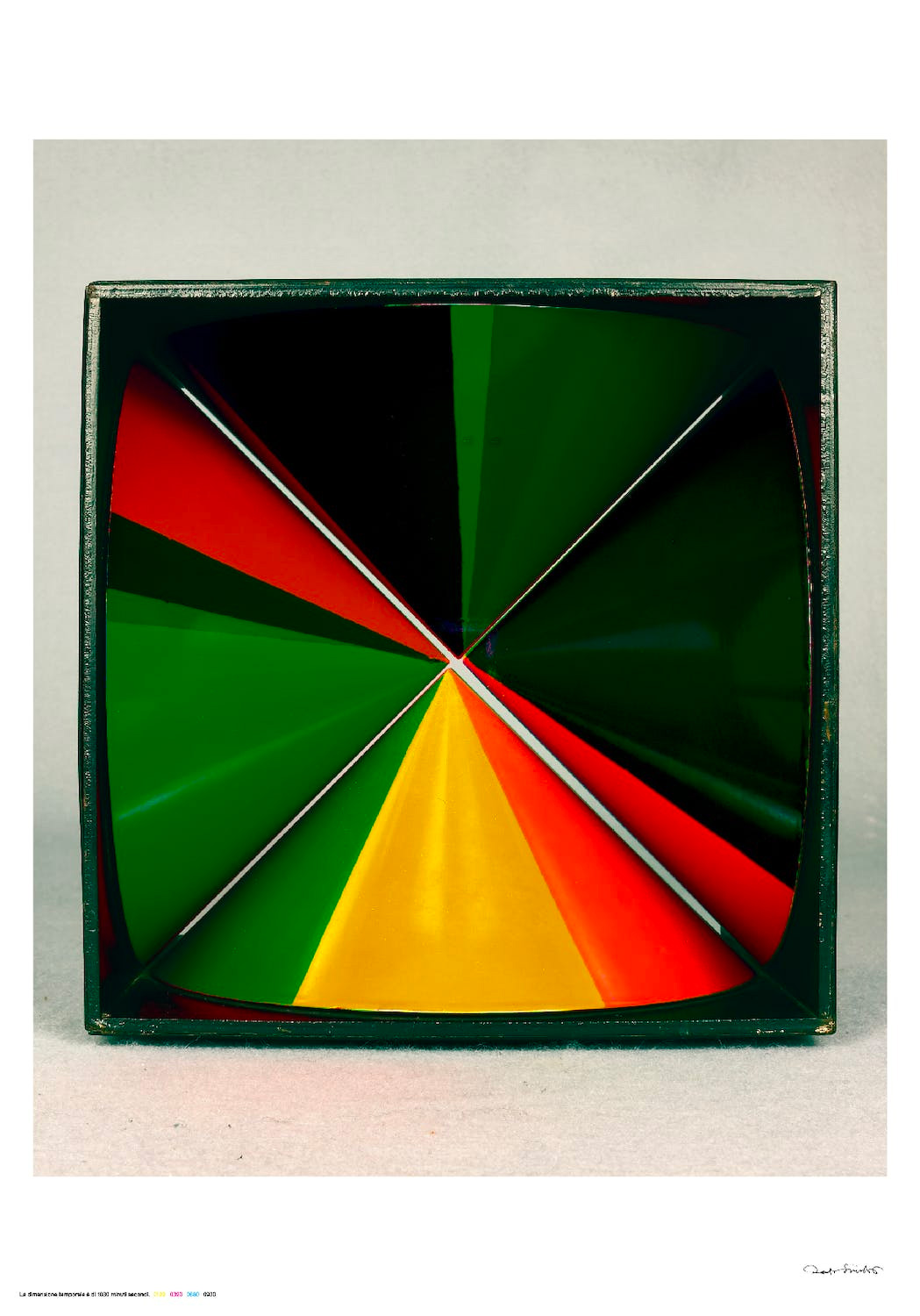
In 1965, Italian artist and designer Bruno Munari created the Tetracono, a 15-cm black steel cube with four aluminum cones that spun at four distinct speeds on a 18-minute cycle. The product’s function was to “show forms while they are in the process of becoming.” Applying Munari’s ideology that “it is not research that should be purposeful, but its results,” designer, educator, and publisher David Reinfurt recently spent six months as a fellow at the American Academy in Rome researching and experimenting with Munari’s product-artwork, unsure of what might follow. Shortly upon his return to New York City, I spoke with Reinfurt about his research and how the Tetracono can act as a model for thinking through larger questions surrounding design, art, and the often grey areas in-between. Over the course of our many conversations, it became clear that Reinfurt’s design research around the Tetracono is not close to finished. He explains, “As long as further digging continues to suggest new making, I will continue.” Already, he has an event planned at the Picture Room in New York City and a lecture at MIT, among other projects.